Meet the Team is our blog series introducing some of the amazing professionals at Ascendient – who they are and what makes them tick. This month, we chat with Emily McCallum, a Senior Manager in our Strategy practice who joined the firm in June 2023.
Your background is what I’d call geographically diverse – Minnesota for your bachelor’s degree, California for your MPH, and now a consulting career in North Carolina. How did all of that come about?
My husband and I both grew up in the same town in Minnesota, but we took very different paths after high school. I went to undergrad at the University of Minnesota, and he joined the U.S. Navy and ended up stationed in Norfolk, VA. Our relationship started out long distance between Minneapolis and Virginia, but we were both thrilled when he accepted a transfer to San Diego in 2012. We were exceptionally lucky to be able to turn that initial two-year posting into ten years in San Diego, during which time I earned my MPH and my husband worked as an underwater construction and demolition diver (and earned his bachelor’s, MBA and PMP certification … he is an overachiever).
When he made the decision to separate from the Navy in 2021, we had a big choice to make … stay in California, head back to Minnesota or move somewhere else entirely. The cost of living in San Diego skyrocketed after the start of the pandemic, so we knew we didn’t want to stay – and I was not interested in moving back to Minnesota winters. We took a few months to research places that had a lower cost of living than CA, a healthy job market, all four seasons (with mild winters) and aligned with our lifestyle. Raleigh kept popping up in our research, so we planned a quick weekend trip to scope out the area and took a HUGE leap of faith moving here! We’ve been in Raleigh since April 2022, and we truly love it here. Fall in North Carolina is pure magic.
Academically, you studied Family Social Science as an undergrad, which included an interesting internship with a charity in London. It looks like you’ve always been driven to help people, so how did that translate to a career in healthcare?
When I started college, I intended to pursue my Master of Social Work after undergrad, but I put my grad school and career plans on hold for a few years due to my husband's military career. When it came time to return to school, I realized my interests had evolved and I found myself drawn back to healthcare, a field that had fascinated me since childhood.
Growing up with several nurses and physicians in my family, and watching my younger sister navigate complex medical issues that required countless specialist visits in her early years, I developed a deep appreciation for frontline medical professionals. What struck me most was how they embody both compassion and problem-solving; they're driven to tackle challenges that directly impact people's lives.
My MPH program crystallized something important for me: while I've always been motivated to help people, I realized I could make the greatest impact by supporting those frontline workers. The administrators, analysts, and public health professionals working behind the scenes ensure that clinicians have the resources and support they need to provide excellent care every single day. That's where I found my calling – using my drive to help people by strengthening the systems that enable direct care.
Healthcare is booming, and MPH grads are in high demand. What was it that attracted you to Ascendient, rather than a hospital setting or another consulting firm?
I actually started my healthcare career at Sharp Healthcare in San Diego, where I spent seven years working in Strategic Planning and Community Benefit, first as an intern during my MPH program, then as a full-time team member after graduation. Sharp was an excellent place to build my foundation in healthcare strategy, and I felt very connected to the organization's culture, mission and people. However, after several years, I found the work becoming cyclical – the same projects, deliverables, and timelines recurring each year. I realized I wanted something that would challenge me differently and allow me to grow beyond what a single health system could offer.
What drew me to Ascendient was the opportunity to work with diverse organizations across the country, tackling different challenges and learning from multiple health departments and health systems rather than just one. Being based here in North Carolina where I live was also important to me after working remotely for a California-based organization. Leading public health and hospital strategy projects at Ascendient means every day and every client brings something new.
Honestly, I wasn't entirely sure what to expect from consulting when I made the leap, but from my very first interview, the people here impressed me with their intelligence, humor and collaborative spirit. Nearly 2 ½ years in, I've found that Ascendient's approach of truly partnering with clients rather than applying cookie-cutter solutions is exactly the kind of meaningful work I was looking for.
In those 2 ½ years, what’s the most interesting or rewarding engagement you’ve worked on so far?
Oh gosh, it’s so hard to choose ... so I am going to highlight one that is more public health-focused and one that is more healthcare strategy-focused.
One of the most rewarding engagements I've worked on was the Health ENC 2024 Community Health Needs Assessment, where I served as project lead coordinating a regional CHNA effort for 34 counties across eastern North Carolina. What made this project special was the scale - managing deliverables for so many counties simultaneously while also helping build local capacity for things like community engagement at the local level - but it was also the relationships. I got to work with incredible teams from local health departments, hospitals and health systems across the region, which really helped me understand the health challenges facing my adopted home state of North Carolina. Seeing how collaborative these organizations were, even while navigating different regulatory requirements and community needs, reinforced why I'm passionate about this work.
I've also found the rural trauma assessment work we did this year for the American College of Surgeons incredibly meaningful. ACS wanted to understand how to better support rural trauma care, where injury mortality rates are significantly higher than in urban areas due to limited resources, workforce shortages, and transportation challenges. As part of this process, I designed and led a comprehensive stakeholder engagement strategy that included conducting interviews with hospital CEOs and state trauma leaders, facilitating focus groups with rural clinicians and APPs, and deploying a national survey that reached 272 respondents. What struck me most was hearing directly from rural providers about the life-or-death decisions they face with limited resources, and knowing our recommendations could help ACS develop programs that genuinely improve trauma outcomes in underserved communities. The potential for real, tangible impact made this project especially rewarding.

Who are you when you’re not at work? What do you love to do outside the office?
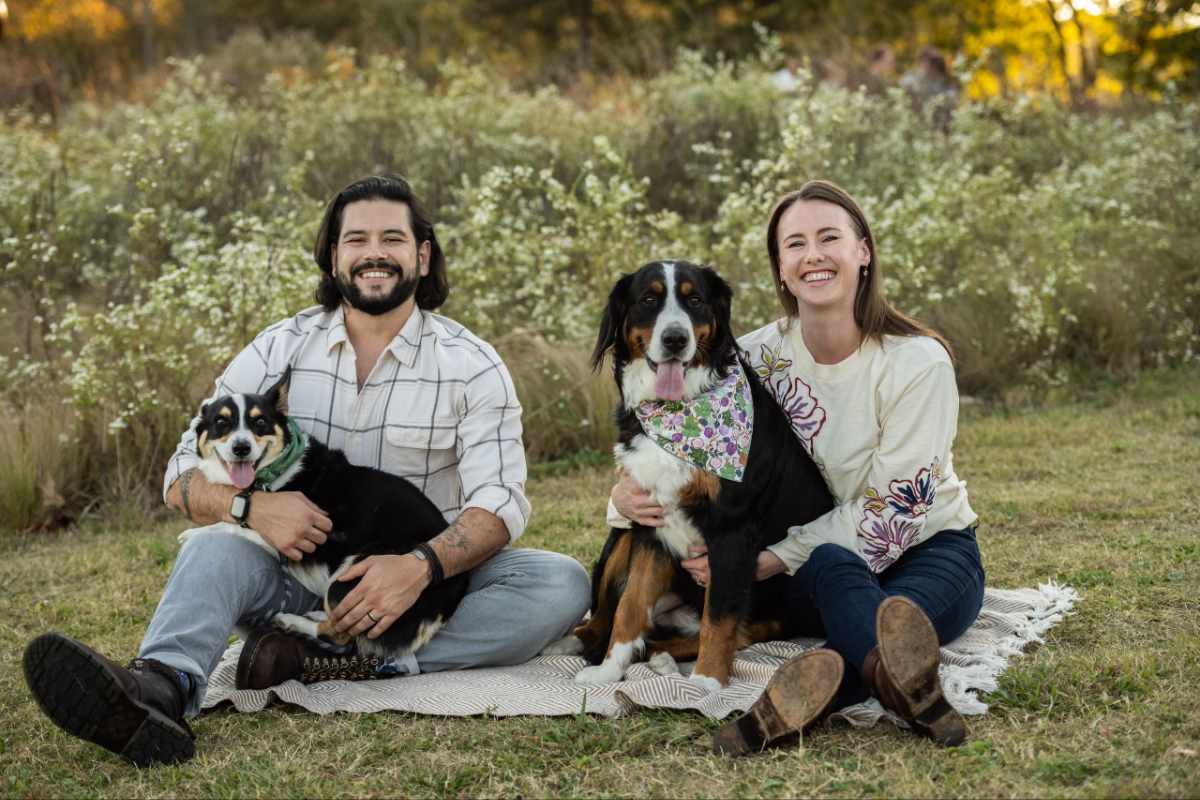
I live just south of Raleigh with my husband, our two dogs and two cats. When the weekend rolls around, you will likely find us out and about exploring a new park or trail with our dogs, meeting up with friends at a brewery or taste-testing the newest restaurant hot spot in the Triangle. And, as my Ascendient colleagues will tell you, I will absolutely never turn down an opportunity to sing some karaoke! When I’ve officially maxed out my extrovert capacities, you can find me digging into my book club’s pick of the month or working my way through a jigsaw puzzle or a crossword.
We also love to travel whenever the stars (and both of our work travel schedules) align! In the past 12 months, we’ve been to Scotland, Germany, the Dominican Republic, Asheville (NC), Las Vegas, San Diego, England and Ireland. Highlights included catching the Christmas Market in Frankfurt’s Aldstadt (Old Town), celebrating my brother’s wedding at the cutest little rockabilly chapel in Vegas, watching Manchester City win a home football match at Etihad Stadium, and nearly getting blown right over the Cliffs of Moher during a tropical storm. We’re looking forward to figuring out what new travel adventures we’ll be putting on the calendar for 2026!
Exit question: If you could solve one issue in the US healthcare system that would have the greatest impact, what would that be?
Access and cost. They're fundamentally connected, and addressing them would have the greatest ripple effect across the entire system. In virtually every CHNA I've worked on, cost consistently emerges as a top barrier to care. I don't believe anyone should have to choose between paying rent and picking up their insulin prescription, or between putting food on the table and getting the surgery that will improve their quality of life.
I've seen both sides of this firsthand. As a military spouse, I had access to Tricare, which is government-administered healthcare that, while not perfect, meant I could always get what I needed to stay healthy without seeing a bill. Transitioning to civilian insurance came with major sticker shock and really drove home how much financial anxiety shapes healthcare decisions for most Americans. If I could solve one thing, it would be ensuring everyone has access to affordable coverage that doesn't require them to navigate a maze of deductibles, networks, and prior authorizations just to get basic care. When people can access preventive and primary care without financial barriers, we see better outcomes across the board: chronic disease management improves, emergency department utilization decreases, and health equity gaps start to close.
Please click here to view Emily's full Ascendient profile and connect on LinkedIn.